Shanghai Risheng Technology Co., Ltd.


Efficient Flame Retardants in Plastics-Reactive Flame Retardants
In order to improve the fire resistance of plastic products and meet the safety of the actual use of materials, flame retardants have become an indispensable additive in plastic modification. With the continuous development of the plastics industry, the requirements for plastic flame retardant products are becoming more and more demanding, which also promotes the continuous development and innovation of flame retardants. According to the different modes of action, flame retardants can be divided into additive type and reactive type. Among them, the added flame retardant is economical and convenient, more commonly used, of course, it has many shortcomings, such as its addition amount is large, flame retardant and polymer compatibility is poor, easy to lose under thermal processing conditions, and there is a negative impact on material performance. Reactive flame retardants can form copolymers with monomers or graft reactions to polymers to obtain polymer flame retardants, which are durable and do not damage the overall performance of materials. This type of flame retardants has become an important direction for the development of future flame retardants.
Compared with additive flame retardants, reactive flame retardants have reactive functional groups in the molecular structure that interact with the corresponding polymer functional groups or polymer monomers, so that the flame retardant can be grafted or embedded into the polymer molecule (as shown in the figure below). Like additive flame retardants, reactive flame retardants can be divided into two categories: halogen-based reactive flame retardants and halogen-free reactive flame retardants.
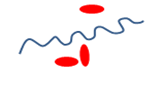
(a) Addition type flame retardant
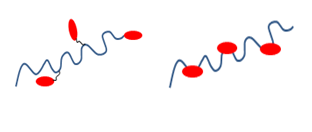
(B) Reactive flame retardants
According to the different reaction functional groups, halogen reactive flame retardants can be divided into unsaturated halogen flame retardants, condensation type halogen flame retardants and epoxy halogen flame retardants.
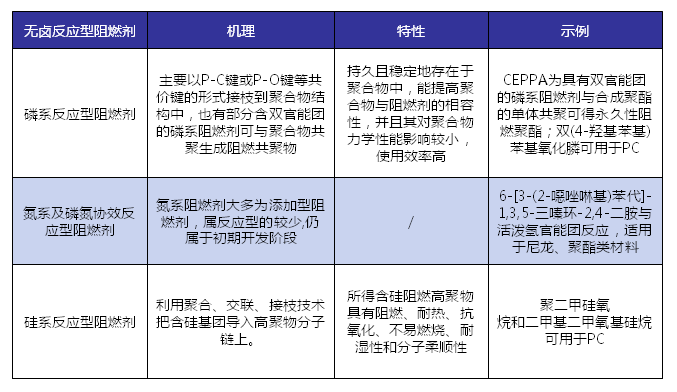
Table 1 Classification of halogen-based reactive flame retardants
Halogen-free flame retardants include phosphorus-based reactive flame retardants, nitrogen-based and phosphorus-nitrogen synergistic reactive flame retardants, and silicon-based reactive flame retardants.
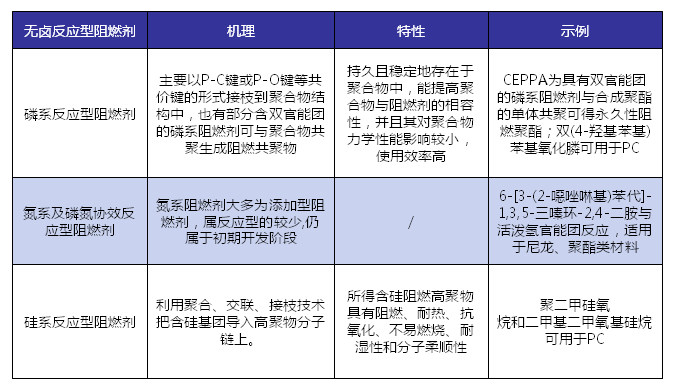
Table 2 Halogen-free reactive flame retardant
At present, reactive flame retardants are still in the development stage, and their application is relatively limited. With the changing requirements of the market for flame retardant materials, more new varieties of reactive flame retardants will emerge. Because reactive flame retardants have the advantages of high efficiency, low dosage, good compatibility with materials, and little influence on the original thermal properties and mechanical properties of materials, the status of reactive flame retardants in the field of flame retardants will continue to improve, and their applications in the field of flame retardants of polymer materials will become more and more extensive. The pursuit of high efficiency, low toxicity, low dosage, long-lasting performance, good compatibility with materials, less impact on the physical and mechanical properties of materials, wide application range, low cost of reactive flame retardants, will become the future application of flame retardant plastics An important development direction.





Shanghai Sunny Technology Co., Ltd.
Telephone:18721778701
E-mail:marketing@shsunny.com
Address: 619 Jinzhang Highway, Jinshan District, Shanghai