Shanghai Risheng Technology Co., Ltd.


Application of Flame Retardant Nylon and Development Trend of Environmental Flame Retardant
At present, my country advocates an energy-saving and environmentally-friendly social development model, and establishes "engineering plastics, functional polymer materials, composite materials and low-cost new plastic alloys" as an important project for industrial structure adjustment, which also promotes the use of engineering plastics in electronic appliances, Automotive, home appliances and construction and other fields.
With the increasing strictness of fire protection standards worldwide and the improvement of national safety and environmental protection awareness, whether engineering plastics can maintain their stable and excellent flame retardant performance in strict environments such as high temperature and high voltage has become the focus of attention.
Nylon is an important engineering plastic, its output ranks first among the five major engineering plastics, and the molecular backbone is composed of repeated amide groups (NH-CO). Nylon not only has excellent mechanical properties and chemical stability, but also has the characteristics of heat resistance, wear resistance, light weight and insulation. Common flame retardant nylon can be divided into non-reinforced flame retardant nylon and glass fiber reinforced flame retardant nylon. Its application fields include binding posts, coil shafts, plugs, switch devices, circuit boards, high-power circuit breakers, switchboards, connectors, Relays, sensors, TV housings, connector fans, lamp housings, electric tool accessories, plastic plates, high-speed bellows, etc.
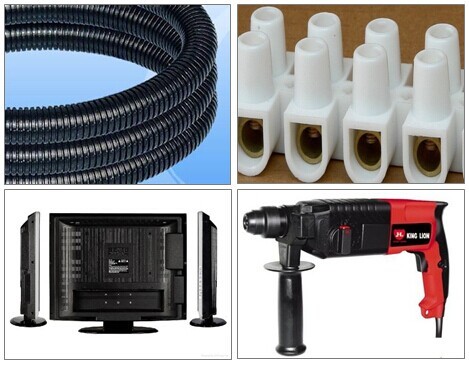
Figure 1. Application examples of flame retardant nylon
Flame retardant nylon can be made in three ways: one. Add flame retardant; II. Grafting the flame retardant group to the polymer main chain or side chain; 3. In the process of nylon polymerization, flame retardant monomer was added for copolymerization. Among the above three methods, the method of adding flame retardant is the most simple, and it is also the mainstream method of preparing flame retardant nylon.
Flame retardants for nylon can be roughly divided into halogen, nitrogen, inorganic compounds and phosphorus-containing flame retardants, and the flame retardant mechanism and flame retardant effect of different flame retardants are also very different. With the introduction of ROHS and WEEE regulations in the European Union, many companies have increased the importance of harmful components in flame retardant materials, which also puts forward higher requirements for the environmental protection of flame retardants for nylon. More and more attention has been paid to the development of environmentally friendly and safe flame retardants.
I. Halogen-free trends
Although halogen-based flame retardants have excellent flame retardant effect, they will produce a large amount of smoke and toxic and corrosive gases during combustion, causing serious pollution to the environment and even threatening people's lives. In recent years, Europe and the United States and other countries have issued relevant environmental protection and safety regulations to strictly restrict the use of halogen-based flame retardants and speed up the development process of halogen-free flame retardants.
① Inorganic flame retardant: Mg(OH)2 and Al(OH)3 are the main flame retardants, but the flame retardant effect is poor. The research at home and abroad mainly focuses on the superfine and microcapsule of this kind of flame retardant, in order to overcome the defect of performance decline caused by the addition of a large number of inorganic flame retardants.
②. Red phosphorus flame retardant: red phosphorus has high flame retardant efficiency, through microencapsulation can solve the problem of red phosphorus moisture absorption, easy to explode.
③. Intumescent flame retardant: this kind of flame retardant smoke less, do not produce harmful gases, flame retardant halogen-free research and development of feasible direction.
II. The trend of smoke suppression and harmful gas reduction
Fire is one of the major disasters that threaten public safety and development. According to statistics, 80% of casualties in fires are caused by asphyxiation caused by harmful gases and smoke produced by material pyrolysis.
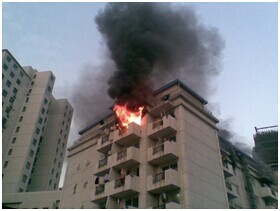
Figure 2. Large amount of smoke from fire
The development of environmentally friendly flame retardants with low smoke emission has become an important topic in the field of flame retardants in recent years. Currently people act as smoke suppressants mainly by adding metal oxides and transition metal oxides. In addition, inorganic fillers such as Al(OH)3 and Mg(OH)2 have a flame retardant effect and can also play a certain smoke suppression effect.
At present, developed countries in the world have generally adopted environmentally friendly flame retardants of phosphorus and inorganic systems, while China is still dominated by halogen flame retardants with greater pollution and higher toxicity, which is contrary to the requirements of national environmental protection policies and the concept of safe production. Strengthening the development of environmentally friendly halogen-free flame retardants is currently the top priority.
Here, we call on the Academy of Sciences to strengthen communication with experts in the modified engineering industry, promote independent innovation and healthy development of the modified plastics industry, enhance the competitiveness of China's engineering plastics, and truly realize a healthy social development model of energy saving and environmental protection.




Shanghai Sunny Technology Co., Ltd.
Telephone:18721778701
E-mail:marketing@shsunny.com
Address: 619 Jinzhang Highway, Jinshan District, Shanghai