Shanghai Risheng Technology Co., Ltd.


Flame Retardant Antistatic Thermoplastic Composites for Coal Mine
In the field of coal mines, metal steel pipes have been used for gas drainage. However, the metal steel pipe is not corrosion-resistant, and the service life is generally 8 ~ 12a; and the corrosion and shedding layer often blocks the pipeline, causing the whole line to be blocked; the change of the formation of the mining area is easy to produce stress concentration and fracture. Thermoplastic engineering plastics have good corrosion resistance, impact resistance and convenient processing, which can completely overcome the above shortcomings. However, the unmodified polymer itself is not flame retardant, and the surface resistance is above 1012Ω, which is easy to generate static electricity. The static electricity generated by non-flame retardant antistatic polymer materials has high voltage and large energy, which will lead to dielectric ionization discharge and easily become an ignition source. If it is released all at once, it is enough to cause gas and coal dust explosion. Due to the use of materials that do not have flame retardant and antistatic properties, serious and serious fire accidents have occurred frequently. The air duct, conveyor belt and cable are called "three fire dragons" in the mine ".
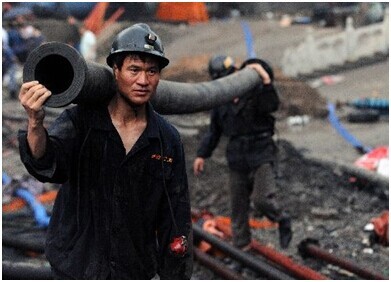
Thermoplastics commonly used in mines include PP/PE, UHWPE pipes, PA66/6, ABS miner's lamp parts, PVC cables, etc. Generally, thermoplastics are flame retardant modified by adding flame retardants. Common flame retardants include halogen flame retardants, halogen-free flame retardants, the latest nano flame retardant aids, silicone oxygen flame retardants, etc. At present, we have done more research on flame retardant modification of plastics and their performance is becoming more mature. For antistatic modification, there is also a certain accumulation in China. In order to endow polymer resin with antistatic performance, it is mainly realized through two aspects. One is to form a hydrophilic layer on the surface of the original resin by adding surface modifier, which produces antistatic due to "water absorption". This method has low cost and good effect, but due to "precipitation" on the surface, it is subject to environmental humidity, moreover, it will slowly fail due to the "wear" of the hydrophilic layer for a long time, thus it is only "non-permanent antistatic". Another method is to realize "permanent antistatic" by adding conductive fillers to form conductive paths. Common conductive fillers include carbon black, metal fiber, carbon fiber, etc., which can achieve better antistatic effect, but they also have their own shortcomings. For example, carbon black is often added in a large amount to achieve better antistatic effect, processing is difficult while mechanical properties are seriously damaged. Although the cost of metal fiber is small, the cost is too expensive and the damage to the machine is great. Relatively speaking, carbon fiber is more suitable for antistatic modification of polymer resin. It only needs to add 5%-10% to achieve 106-109Ω antistatic effect. The cost increase is relatively small, and the mechanical properties are quite excellent, but its own rigidity is strong and it is not impact resistant, when developing materials, it is necessary to consider increasing their impact resistance. It should be pointed out that the latest ionic polyether block conductive resin material on the market has a surface resistance of 107-109, and the surface resistance can only reach 108-109 Ω when added to the polymer. The addition amount is large and the price is expensive. Moreover, it is not suitable for reinforced products and cannot be used in components with high mechanical strength requirements.
In order to ensure safe production in coal mines, Article 128 of the Coal Mine Safety Regulations stipulates that flame retardant and antistatic materials must be used in coal mines. The coal industry standard MT164-1995 "positive pressure air duct for coal mines" and the MT165-1995 "negative pressure air duct for coal mines" clearly stipulate the flame retardant and antistatic performance requirements of air duct materials. In the Notice on Printing and Distributing the Measures for the Identification of Major Safety Production Hazards in Coal Mines (for Trial Implementation) issued by the State Administration of Coal Mine Safety Supervision [2005] No. 133, the use of non-flame-retardant antistatic air rams was identified as a major safety hazard, and production must be stopped immediately for rectification. Therefore, non-flame-retardant antistatic materials neither meet the relevant provisions of the "Coal Mine Safety Regulations", do not meet the requirements of coal mine safety production, nor have the safety signs of mining products, and will be eliminated. The thermoplastic composite material modified by flame retardant and antistatic will be widely used in the field of coal mine.





Shanghai Sunny Technology Co., Ltd.
Telephone:18721778701
E-mail:marketing@shsunny.com
Address: 619 Jinzhang Highway, Jinshan District, Shanghai